Last updated on February 2nd, 2026 at 12:56 pm
Children & Women In Sports
Children and women in sports are very important for any country’s sports development. For getting higher performance in the field of sports. Children and women need to be strong enough both physically and mentally. They need proper motor development.
Click Below For Class 12 All Subject Sample Papers 2024
1. 15+ Political Science Sample Paper 2026
2. 15+ Economics Sample Paper 2026
3. 15+ Business Studies Sample Paper 2026
4. 12+ Physical Education Sample Paper 2026 With Solution
5. 15+ Physics Sample Paper 2026 With Solution
6. 15+ Chemistry Sample Paper 2026 With Solution
7. 15+ Biology Sample Paper 2026 With Solution
8. 15+ English Sample Paper 2026
9. 15+ History Sample Paper 2026
10. 15+ Geography Sample Paper 2026
11. 15+ Maths Sample Paper 2026
Exercise Guidelines of WHO for different age groups.
Physical activity is crucial for everyone’s health and well-being, regardless of age. Engaging in regular exercise helps prevent diseases, strengthens our bodies, improves mental health, and promotes overall fitness.
The World Health Organization (WHO) provides scientifically backed guidelines to help people understand how much and what kind of physical activity they need. These guidelines are important, especially when considering the specific needs of children and women in sports, as covered in our syllabus.

A. Children Under 5 Years of Age
Less than 1 year
- Physically active several times a day through interactive floor-based play.
- Includes at least 30 minutes of tummy time.
- Should not be restrained for more than 1 hour at a time.
- Screen time is not recommended.
- Encourage reading and storytelling when sedentary.
Sleep:
- 0-3 months: 14-17 hours of good quality sleep (including naps).
- 4-11 months: 12-16 hours of good quality sleep (including naps).
- 1-2 years
- At least 180 minutes of physical activity spread throughout the day.
- Includes moderate to vigorous intensity activities.
- Should not be restrained for more than 1 hour.
- No screen time for 1-year-olds.
- For 2-year-olds: screen time should be no more than 1 hour.
- Encourage reading and storytelling.
Sleep: 11-14 hours of good quality sleep
(including naps) with regular sleep/wake times.
3-4 years
- At least 180 minutes of physical activity at any intensity.
- Includes at least 60 minutes of moderate to vigorous intensity activity.
- Should not be restrained for more than 1 hour.
- Screen time should be no more than 1 hour; less is better.
- Encourage reading and storytelling.
Sleep: 10-13 hours of good quality sleep (may include a nap) with regular sleep/wake times.
B. Children and Youth (5-17 Years)
Intensity: Moderate to vigorous.
Duration: At least 60 minutes per day; more provides additional health benefits.
Types of Activities:
- Aerobic exercises.
- Muscle-strengthening activities.
- Fundamental movements (jumping, running, throwing, twisting, etc.).
- Play, games, sports, recreation, and physical education.
Benefits:
- Improves cardiorespiratory and muscular fitness.
- Enhances bone health.
- Supports cardiovascular and metabolic health.
- Reduces symptoms of anxiety and depression.
C. Adults (18-64 Years) and Older Adults (65+ Years)
Aerobic Activity:
- 150-300 minutes/week of moderate intensity OR 75-150 minutes/week of vigorous intensity.
- Bouts should be at least 10 minutes.
Muscle Strengthening:
Activities involving major muscles at least two days per week.
Unique Requirement for Older Adults:
Balance-enhancing exercises three or more days per week (especially for those with poor mobility).
Benefits:
- Lowers risk of mortality, heart disease, stroke, Type 2 diabetes, metabolic syndrome, colon/breast cancers, depression, and fractures.
- For older adults: also lowers risk of cognitive decline.
Click Below To Learn All Chapter Notes
- Class 12 Physical Education Syllabus
- Chapter 1: Management of Sporting Events
- Chapter 2: Children and women in sports
- Chapter 3: Yoga and Lifestyle
- Chapter 4: Physical Education and Sports for CWSN
- Chapter 5: Sports & Nutrition
- Chapter 6: Test and measurement in sports
- Chapter 7: Physiology and Injuries in Sports
- Chapter 8: Biomechanics and sports
- Chapter 9: Psychology and sports
- Chapter 10: Training in Sports
Common Postural Deformities
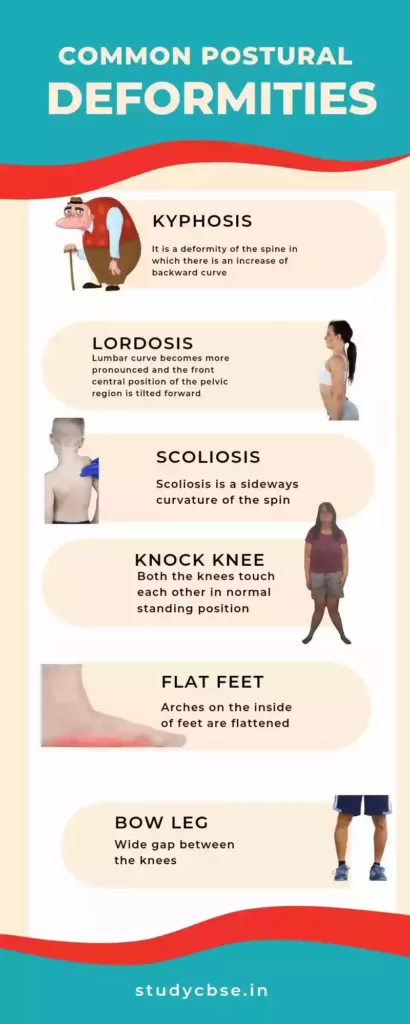
Spinal Curvature
This type of deformity is related to the vertebral column. This deformity develops by carrying excessive weight beyond capacity or weak muscles cause curvature of spinal curvature.

There are three types of spinal deformities
Kyphosis (Hunch Back)
Excessive outward curvature of the thoracic spine.
Causes:
- Poor sitting posture
- Weak back extensors
- Osteoporosis or spinal disorders
Effects:
- Rounded upper back
- Neck and shoulder strain
- Breathing difficulty
Corrective Measures:
➤ Back extension exercises and prone lifts
➤Chest opening stretches
Yogic Asanas:
- Bhujangasana (Cobra Pose): Strengthens spine and opens chest
- Shalabhasana (Locust Pose): Builds back muscles
- Matsyasana (Fish Pose): Expands chest and corrects upper spine curvature
Round Shoulders
Forward rounding of shoulders due to poor posture or muscular imbalance.
Causes:
- Prolonged desk work or screen use
- Weak upper back muscles
- Tight chest muscles
Effects:
- Poor posture and appearance
- Shoulder and neck pain
- Reduced lung capacity
Corrective Measures:
- Shoulder retraction and wall angels
- Chest stretches and trapezius strengthening
Yogic Asanas:
➤ Bhujangasana (Cobra Pose): Opens
chest and strengthens back
➤Dhanurasana (Bow Pose): Corrects shoulder alignment
➤Gomukhasana (Cow Face Pose): Improves shoulder flexibility
Lordosis (Sway Back)
Excessive inward curvature of the lumbar spine.
Causes:
- Tight lower back and hip flexors
- Obesity or pregnancy
Effects:
- Lower back pain
- Poor posture and spinal stress
- Reduced core stability
Corrective Measures:
Pelvic tilts and abdominal strengthening
Hamstring and hip flexor stretches
Yogic Asanas:
- Paschimottanasana (Seated Forward Bend): Stretches lower back and hamstringsent of muscles, obesity, and diseases affecting vertebra
- Marjariasana (Cat-Cow Pose): Mobilizes spine and balances curvature
- Setu Bandhasana (Bridge Pose): Strengthens core and glutes
Scoliosis
Lateral curvature of the spine in “S” or “C” shape.
Causes
- Congenital spinal deformity
- Uneven leg length
- Neuromuscular conditions
Effects:
- Uneven shoulders or hips
- Back pain and fatigue
- Reduced lung function in severe cases
Corrective Measures:
- Side plank and spinal alignment exercises
- Physiotherapy and bracing
- Surgical correction in severe cases
Yogic Asanas:
- Tadasana with side stretch: Lengthens spine and balances posture
- Trikonasana (Triangle Pose): Improves lateral flexibility and spinal alignment
- Ardha Matsyendrasana (Half Spinal Twist): Enhances spinal mobility
Knock Knee (Genu Valgum)
Knees touch while ankles remain apart when standing straight.
Causes:
- Weak hip and thigh muscles
- Vitamin D deficiency (rickets)
- Improper posture during growth
Effects:
- Uneven weight distribution
- Difficulty in walking or running
- Strain on knee joints
Corrective Measures:
- Side-lying leg raises and pillow walking
- Horse-riding stance exercises
- Use of orthotic supports
Yogic Asanas:
- Utkatasana (Chair Pose): Builds thigh strength and corrects knee alignmenthosphorous. It may happen due to Rickets, Weak legs, Obesity during childhood, overweight, etc.
- Tadasana (Mountain Pose): Improves posture and leg alignment
- Vrikshasana (Tree Pose): Strengthens legs and improves balance
Bow Legs (Genu Varum)
Knees remain apart while ankles touch when standing straight.
Causes:
- Rickets or vitamin D deficiency
- Improper posture during childhood
- Genetic factors
Effects:
- Strain on knees and ankles
- Poor gait and balance
- Increased risk of joint degeneration
Corrective Measures:
- Inner thigh strengthening (e.g. adductor squeezes)
- Stretching of outer thigh muscles
- Use of corrective braces in children
Yogic Asanas:
- Utkatasana (Chair Pose): Builds leg strength and corrects alignment
- Garudasana (Eagle Pose): Strengthens inner thighs and improves leg alignment
- Baddha Konasana (Bound Angle Pose): Opens hips and stretches inner thighs
Flat Foot (Pes Planus)
The arch of the foot collapses; the entire sole touches the ground.
Causes:
- Weak foot muscles
- Prolonged standing on hard surfaces
- Genetic predisposition
Effects:
- Poor shock absorption
- Foot fatigue and pain
- Reduced balance and agility
Corrective Measures:
- Toe curls and arch-building exercises
- Walking on toes and sand
- Use of arch-support insoles
Yogic Asanas:
- Padahastasana (Hand-to-Foot Pose): Improves flexibility and foot awareness
- Tadasana (Mountain Pose): Encourages arch formation
- Vrikshasana (Tree Pose): Strengthens foot muscles
Women’s Participation In Sports- Physical, Psychological, and Social Benefits
Women are equally important in society, and take part in social activities. Today, modern society started accepting women’s participation in sports competitions.
The trend of women’s participation in sports has improved in Indian society and thus the number of women participating in sports has increased.
In urban areas, female participation in sports is higher than in rural areas.
Today, Indian society has recognized many Indian sportswomen like Mary Kom, Saina Nehwal, Sania Mirza, PV Sindhu, Jwala Datta, etc
Physical, Psychological, and Social benefits of women’s participation in sports
The participation of women in sports has seen a significant rise globally and in India. This is a positive trend, as playing sports offers numerous advantages that contribute to a woman’s overall well-being and development. Encouraging girls and women to engage in physical activities and sports is crucial for their health, confidence, and social integration. As discussed in our chapter on Children and Women in Sports, these benefits can be broadly categorized into physical, psychological, and social aspects.

Physical Benefits
Engaging in sports and regular physical activity leads to direct improvements in a woman’s physical health:
Increased Energy Levels: Contrary to feeling tired, regular activity often boosts overall energy levels.
Improved Cardiovascular Health: Sports strengthen the heart and lungs, improve blood circulation, and help maintain healthy blood pressure, reducing the risk of heart disease.
Healthy Weight Management: Physical activity burns calories and builds muscle mass, making it easier to maintain a healthy body weight and reducing risks associated with obesity.
Stronger Bones: Weight-bearing activities and resistance exercises in sports increase bone density. This is particularly important for women to reduce the risk of osteoporosis (weak and brittle bones) later in life.
Increased Muscle Strength and Endurance: Sports build stronger muscles, improving overall physical capability and stamina for daily activities.
Enhanced Flexibility and Coordination: Many sports improve flexibility, balance, and coordination, reducing the risk of injuries in daily life.
Reduced Risk of Chronic Diseases: Regular participation lowers the risk of developing conditions like type 2 diabetes, high blood pressure, and certain types of cancer (like breast cancer).
Psychological Benefits
The positive impact of sports extends to mental and emotional well-being:
- Stress Reduction and Improved Mood: Physical activity acts as a natural stress reliever. Exercise releases endorphins, which are chemicals in the brain that act as natural mood lifters, helping to combat anxiety and depression.
- Increased Self-Esteem and Confidence: Achieving fitness goals, mastering new skills, competing, and being part of a team boosts self-worth and confidence. Overcoming challenges in sports builds resilience.
- Positive Body Image: Focusing on what the body can do rather than just how it looks helps women develop a healthier and more positive body image.
- Improved Concentration and Focus: Regular physical activity can enhance cognitive functions like concentration, memory, and alertness.
- Development of Resilience: Sports teach individuals how to handle both winning and losing, building mental toughness and the ability to bounce back from setbacks.
- Sense of Empowerment: Taking control of one’s physical health and achieving athletic goals can be incredibly empowering for women.
Social Benefits
Sports participation offers significant advantages in social development and interaction:
- Teamwork and Cooperation: Team sports teach valuable lessons about working together towards a common goal, cooperation, and supporting teammates.
- Development of Leadership Skills: Sports provide opportunities to take on leadership roles, such as team captain, fostering decision-making and responsibility.
- Improved Communication Skills: Interacting with coaches, teammates, and sometimes opponents enhances verbal and non-verbal communication skills.
- Building Social Networks: Sports create opportunities to make new friends, build strong social bonds, and develop a sense of belonging within a team or community.
- Breaking Gender Stereotypes: Women participating and excelling in sports challenges traditional gender roles and stereotypes, promoting gender equality and inspiring other girls and women.
- Discipline and Time Management: Balancing training schedules, competitions, and other responsibilities (like studies or work) develops discipline and effective time management skills.
- Learning Sportsmanship: Participants learn the importance of fair play, respecting rules, opponents, and officials.
Conclusion The involvement of women in sports offers holistic benefits, positively impacting their physical health, mental well-being, and social skills. It contributes not only to individual development, fostering strength, confidence, and resilience, but also plays a vital role in promoting gender equality and building healthier communities. Providing adequate opportunities, support, and encouragement for girls and women to participate in sports is essential for their empowerment and overall societal progress.
Causes of Less Participation Of Indian Women In Sports
- Gender inequality & social attitude
- No parental encouragement
- Traditional society
- Less motivation and inspiration
- Women constraining other women
- Lack of plans and initiatives for sports for women by the Government
- Male dominant culture
- Less availability of women coaches
- No independent games facilities for women
- More emphasis on study
- Less competition
- Economic Factors
- Social Customs and Rights
- Low Health Consciousness
- Less Media Coverage
- Fewer spectators interest
- Lack of Incentives & Career
Special consideration (Menarche and menstrual dysfunction)
Women undergo many physiological and psychological changes in their life which have to be accepted in a positive way.
Menarche (Onset of Menstruation)
What it is: Menarche simply means the first menstrual period a girl experiences. It marks the beginning of her reproductive years.
Typical Age: It usually occurs between the ages of 9 and 16, but the exact timing varies greatly among individuals due to genetics, nutrition, body weight, and overall health. Intense physical training might slightly delay menarche in some athletes, but this isn’t always the case.
Impact on Sports Participation:
Menarche itself is not a reason to stop participating in sports or physical activity.
Some girls might experience mild discomfort, cramps, or fatigue initially, which could temporarily affect how they feel during training.
There might be psychological adjustments or anxiety about managing periods during sports activities.
Considerations and Support:
Education: Provide clear information about menstruation, emphasizing that it’s normal and healthy.
Reassurance: Assure young athletes that menstruation doesn’t typically hinder long-term performance. Many top athletes compete successfully during their periods.
Support System: Coaches and parents should be understanding and supportive, allowing flexibility if the athlete feels unwell.
Hygiene Management: Educate athletes on proper hygiene practices (using pads, tampons, or menstrual cups) during training and competition.
Menarche is the beginning of the menstrual cycle or first menstrual bleeding in females, which is considered the central event of female puberty.
After the onset of menarche female experiences many Physiological and anatomical changes like increased body mass, secretion of estrogen, gain in height, widening of pelvic region, etc.
It occurs between 12 to 14 years of age. It varies due to biological, genetical, environmental, and nutritional factors.
Women with delayed menarche may get more success in some sports like gymnastics. Those who have early menarche may have an advantage in sports like swimming and rowing.
Nutrition: Ensure adequate nutrition, especially iron intake, as blood is lost during menstruation.
Menstrual Dysfunction

What it is: This refers to abnormalities or irregularities in the menstrual cycle. In athletes, this often relates to changes caused by intense training, diet, or stress.
Common Types in Athletes:
Amenorrhea: The absence of periods.
Primary Amenorrhea: When a girl hasn’t had her first period by age 15/16.
Secondary Amenorrhea: When a woman who previously had regular periods stops menstruating for 3 months or more. This is more commonly seen in athletes due to training factors.
Oligomenorrhea: Infrequent periods (cycles longer than 35 days) or irregular cycles.
Dysmenorrhea: Painful periods (cramps). While common, severe pain affecting performance should be evaluated.
Causes in Athletes:
Low Energy Availability: This is a primary cause. It means the athlete isn’t consuming enough calories to support their training demands and basic body functions, including reproduction. This can happen with or without an eating disorder.
Intense Exercise/Overtraining: Very high volumes or intensity of training without adequate recovery.
Low Body Fat: While not a direct cause, very low body fat is often associated with low energy availability and intense training.
Stress: Physical and psychological stress from training, competition, and life can affect hormones regulating the cycle.
Female Athlete Triad


It is the syndrome of females which includes Osteoporosis, Amenorrhea, and Eating disorders. which is known as Triad. These traid can be serious with lifelong health consequences.
The symptoms of traid are fatigue, low body weight than required, frequent injuries, loss of fitness, low self-esteem, cessation of menstruation, etc.
Osteoporosis
It is the weakening of bone due to loss of bone mineral density. Low levels of estrogen and poor nutrition especially lower calcium intake lead to Osteoporosis.
Causes
- Insufficient calcium and vitamin D in the diet
- Hormone level decrease
- Menstrual dysfunction for more than six months
- Eating disorders like anorexia and bulimia.
Amenorrhea
Amenorrhea is the absence of the menstruation cycle. It is often defined as missing one or more menstrual periods.
Amenorrhea also refers to the absence of menstruation in someone who has not had a period by age 15.
Causes
The main causes of primary amenorrhea relate to hormone levels, although anatomical problems also can cause amenorrhea.
Female Athlete Triad / RED-S:
- Menstrual dysfunction (especially amenorrhea) is a key component of what was known as the Female Athlete Triad (along with low energy availability and low bone density/osteoporosis).
- The broader, more current term is RED-S (Relative Energy Deficiency in Sport). This recognizes that low energy availability affects many body systems (metabolism, immunity, cardiovascular health, psychological health, bone health, menstruation) and impairs performance.
- Health and Performance Implications:
- Missed periods are not a sign of peak fitness; they often indicate the body is under too much stress or lacks sufficient energy.
- It can lead to poor bone health (increased risk of stress fractures and osteoporosis later).
- It can negatively impact performance, muscle function, and recovery.
- Long-term health risks can include infertility and cardiovascular problems.
- Management and Considerations:
- Seek Medical Advice: Athletes experiencing menstrual irregularities should consult a doctor to rule out other medical causes and get proper guidance.
- Address Energy Intake: Often involves increasing calorie intake with the help of a sports nutritionist to match energy expenditure.
- Modify Training: Sometimes, adjusting the training load (intensity or volume) under professional guidance is needed.
- Monitor Bone Health: Especially if periods have been absent for a while.
- Open Communication: Athletes should feel comfortable discussing menstrual health with coaches, parents, or healthcare providers.
Conclusion While menarche is a normal developmental milestone requiring sensitivity and support, menstrual dysfunction, particularly absent or infrequent periods in athletes, should be taken seriously. It’s often linked to low energy availability (RED-S) and can compromise both current performance and long-term health, especially bone health. Recognizing these issues, promoting open communication, ensuring adequate nutrition, and seeking professional help when needed are crucial considerations for supporting the well-being of women in sports.
Click Below For Class 12 All Subject Sample Papers 2024
1. 15+ Political Science Sample Paper 2024
2. 15+ Economics Sample Paper 2024
3. 15+ Business Studies Sample Paper 2024
4. 12+ Physical Education Sample Paper 2024 With Solution
5. 15+ Physics Sample Paper 2024 With Solution
6. 15+ Chemistry Sample Paper 2024 With Solution
7. 15+ Biology Sample Paper 2024 With Solution
8. 15+ English Sample Paper 2024
9. 15+ History Sample Paper 2024
10. 15+ Geography Sample Paper 2024
11. 15+ Maths Sample Paper 2024
Eating Disorder
Many girls or women try to lose weight in an unethical way in order to improve their performance or look good, which leads to serious health problems.
There are two types of eating disorders.
Anorexia Nervosa
It is an eating disorder that causes people to obsess about weight and what they eat. Anorexia is characterized by a distorted body structure, with an unwanted fear of being overweight.
People trying to maintain a below-normal weight through starvation or too much exercise.
Bulimia Nervosa
In this disorder, female athletes eat excessive amounts of food and vomit intentionally in order to not gain weight.
It is a serious eating disorder marked by bingeing. Bulimia is a potentially life-threatening eating disorder.
People take dangerous steps to avoid weight gain like vomiting (purging), excessive exercising, or fasting.
Click Below To Learn Other Chapter Notes
- Class 12 Physical Education Syllabus
- Chapter 1: Management of Sporting Events
- Chapter 2: Children and women in sports
- Chapter 3: Yoga and Lifestyle
- Chapter 4: Physical Education and sports for CWSN
- Chapter 5: Sports & Nutrition
- Chapter 6: Test and measurement in sports
- Chapter 7: Physiology and Injuries in sports
- Chapter 8: Biomechanics and sports
- Chapter 9: Psychology and sports
- Chapter 10: Training in Sports
Children and women in sports chapter 5 CBSE, class 12 Physical Education notes. This cbse Physical Education class 12 notes has a brief explanation of every topic that NCERT syllabus has.
You will also get ncert solutions, cbse class 12 Physical Education sample paper, cbse Physical Education class 12 previous year paper.
Click Below For Class 12 All Subject Sample Papers 2024
1. 15+ Political Science Sample Paper 2024
2. 15+ Economics Sample Paper 2024
3. 15+ Business Studies Sample Paper 2024
4. 12+ Physical Education Sample Paper 2024 With Solution
5. 15+ Physics Sample Paper 2024 With Solution
6. 15+ Chemistry Sample Paper 2024 With Solution
7. 15+ Biology Sample Paper 2024 With Solution
8. 15+ English Sample Paper 2024
9. 15+ History Sample Paper 2024
10. 15+ Geography Sample Paper 2024
11. 15+ Maths Sample Paper 2024
Frequently Asked Questions
Multiple Choice Questions
1. Lordosis is –
a. Inward curvature
b. Outward curvature
c. Sideward curvature
2. There are ——- types of motor development
a. 3
b. 4
c. 2
d. 5
3. Which is not a factor affecting Motor development
a. Biological factor
b. Social factor
c. Nutrition
d. Physical activities
4. Childhood stage starts from
a. 3 to 10 years
b. 2 to 9 years
c. 3 to 12 years
d. 3 to 11 years
5. Which one is not a deformity related to lower extremity
a. Scoliosis
b. Flat Foot
c. Bow leg
d. Knock knee
Short And Long Questions And Answers
1. Suggest physical exercises for childhood and adulthood. (2020)
Ans. Physical exercises for children and adults can be simple activities that are correlated to age, sex, weight and body structure.
All children and adults can indulge in simple activities like brisk walking or running and play sports, both outdoors and indoors, like badminton, volleyball, and cricket, or go for a swim.
More athletic persons can undertake adventure sports such as mountain climbing and rafting, etc.
2. Give your outlook on the participation of Indian women in sports. (2020)
Ans. Participation of women in sports in India may be a new phenomenon but is a very desirable development.
While in most countries and sports, males have been more active, the increasing participation of women in sports helps remove gender inequality.
Over the last few decades, female Indian sportspersons have brought laurels to our country ranging from badminton, tennis, and cricket to athletics and shooting.
We now have women champions such as Saina Nehwal and P.V. Sindhu in badminton, Heena Sindhu in shooting, and Geeta Phogat in wrestling.
In cricket also, Indian women are doing very well and with increasing support from the government and the public, it will get even better.
More scholarships, more funding, and better spectator participation will help encourage more participation of Indian women in sports.
3. Which type of deformity is “Kyphosis”? (2019)
Ans. Kyphosis is a spinal disorder in which an excessive outward curve of the spine results in an abnormal rounding of the upper back. The condition is sometimes known as “roundback” or, in the case of a severe curve, as “hunchback”
4. What is motor development? (2019)
Ans. Motor development is the process of learning how to use muscles in the body to move. This is also defined as the development of movement.
5. Among females, what type of Menstrual Dysfunction is called Amenorrhoea? (2019)
Ans. Amenorrhoea is the absence of a menstrual period in a woman of reproductive age.
6. What do you mean by “Bulimia”? (2019)
Ans. Bulimia is an eating disorder in which a person has regular episodes of eating a very large amount of food (bingeing) during which the person feels a loss of control over eating.
The person then uses different ways, such as vomiting or laxatives (purging), to prevent weight gain.
7. On the basis of physiological parameters, mention any two gender differences. (2019)
Ans. The prominent physiological gender differences are that in females, there is the occurrence of menarche and menstruation.
8. What is Anorexia nervosa? (2019)
Ans. Anorexia nervosa is an eating disorder, characterized by low weight, food restriction, fear of gaining weight, and a strong desire to be thin.
9. What is a flat foot? (2019)
Ans. A flat foot is a condition when the normal curvature of the feet is missing and the feet fall flat fully on the ground.
10. Define osteoporosis. (2019)
Ans. Osteoporosis is a disease in which the density and quality of bone are reduced. As bones become more porous and fragile, the risk of fracture is greatly increased.
11. What are the causes of osteoporosis? (2019)
Ans. The causes of osteoporosis are:
• Dietary deficiency of calcium and vitamin D, besides other vitamins and minerals like magnesium, phosphorus, vitamin K, vitamin B and vitamin B12, leads to osteoporosis.
• Lack of exercise also leads to osteoporosis.
• When women reach menopause, their estrogen levels drop significantly which leads to osteoporosis
• Medical conditions that can lead to osteoporosis include intestinal problems like celiac disease and
• Certain medications may cause osteoporosis including steroids.
• The chemicals found in cigarettes make it more difficult for the body to use calcium. They also impact estrogen’s ability to protect the bones. Excessive alcohol consumption also negatively impacts the
12. Write briefly about the prevention and management of “Anorexia”. (2019)
Ans. Anorexia is an eating disorder characterized by an abnormally low body weight, an intense fear of gaining weight and a distorted perception of weight.
Sufferers of this condition focus on controlling their weight and shape mostly by taking extreme steps that tend to significantly interfere with their lives.
People with Anorexia usually severely restrict the amount of food they eat. They may also try to exercise excessively.
This often leads to emotional and behavioral issues involving an unrealistic perception of body weight and an extremely strong fear of gaining weight or becoming fat. Most sufferers appear extremely thin.
Physical symptoms of this eating disorder include extreme weight loss, lack of sleep, frequent fainting, thin hair and absence of menstruation. Constipation and abdominal pain are common.
Emotional and behavioral symptoms include attempts to lose weight by severely restricting food intake through dieting, fasting or exercising excessively.
Other symptoms include preoccupation with food, frequently skipping meals or refusing to eat and eating only a few food items and denial of hunger or making excuses for not eating.
Treatment includes psychological counseling, medication and sometimes hospitalization along with nutritional counseling.
13. Explain ‘Flat Foot’ and ‘Knock Knees’ and also suggest corrective measures for both postural deformities. (2019)
Ans. Flat Foot is when the normal curvature of the feet is missing and the feet fall flat fully on the ground. Weight distribution is altered and causes premature tiring of feet.
Also there is strain on knees, hip and spine. Flat foot can be corrected by exercises like toe jumping and rope skipping. Standing on uneven balls and half balls is also recommended.
Pushing the toes against the wall forcefully and then relaxing helps as does use of an arch support in footwear.
Knock Knees are when the knees touch each other before the feet can close together in an erect posture. The knees strike each other while running and walking fast. Knock knees can hamper participative sports.
Prevention of knock knees is easier than correction. Since this deformity is skeletal in origin, in most cases correction is difficult with increasing age.
Horse riding is suggested as a good corrective exercise. Side raises and plank exercises are also helpful. Use of corrective calipers is also recommended especially at the pre-puberty stage. Yoga asanas such as Padmasana and Gomukhasana are recommended.
14. Write in detail the symptoms and causes of amenorrhoea. (2019)
Ans. Amenorrhoea is the absence of menstruation—one or more missed menstrual periods. Besides stopped periods, one can have pelvic pain, headaches, vision changes and acne.
Amenorrhoea can occur for a variety of reasons. It can be caused by natural reasons, such as pregnancy, breast-feeding and menopause.
Medications for various health issues can also cause this condition. Sometimes lifestyle factors contribute to amenorrhoea like low body weight, excessive exercise, stress and hormonal imbalance in diseases like thyroid, etc. Problems with the reproductive organs like structural abnormalities also lead to amenorrhoea.
15. How can physical activities be corrective measures for common postural deformities? (2019)
Ans. There are several deformities that give rise to abnormal curvature in the vertebral column or any other part of the body.
These deformities include Kyphosis, Lordosis, Scoliosis, Round Shoulders, Knock Knees’ Bow Legs and Flat Feet. Many of these deformities are amenable to correction with the help of supervised physical exercises.
To correct Kyphosis, the sufferer has to be conscious about the posture they have while sitting, standing, or walking. A few corrective yoga exercises are Halasana, Paschimottanasana or slowly stretching the body parts so that the hollow back problem can be removed. Abdominal muscle strengthening exercises also help.
For improving flat foot toes it is recommended to walk on toes, pick up objects with toes, make alphabets in sand with toes, and stretch Flat Foot may also need shoes with arc.
For knock knees, horse riding and sometimes use of calipers is done. Bruegger’s exercises and bench press help with rounded shoulders. For bow legs, yoga recommends Garudasana, Ardhamatsyendrasana and Ardha Chakrasana. (2017)
16. What is Lordosis? Explain.
Ans. Lordosis is the inward curvature of the lumbar and cervical regions of the human spine.
17. Define motor development. (2017)
Ans. Motor development refers to the development of a child’s bones, muscles and the ability to move around. Motor development can be divided into two sections: gross motor development and fine motor development.
18. What is menopause? (2017)
Ans. Menopause is the time when a woman’s menstrual periods stop permanently.
19. What is Osteoporosis? Explain factors that lead to Osteoporosis in women. (2017)
Ans. Osteoporosis, which literally means porous bone, is a disease in which the density and quality of bone are reduced.
The leading cause of osteoporosis is a lack of certain hormones, particularly estrogen, in women especially those older than 60 years of age. Lower estrogen levels increase the risk of osteoporosis in women.
20. What are the causes of ‘Flat Foot’ and ‘Knock Knees’? Suggest physical activities as corrective measures for these deformities. (2017)
Ans. A flat foot is a deformity when the arches on the inside of the feet are flattened. Knock knees are angular deformities at the knee in which while standing the knees touch but the ankles do not.
Flat feet need treatment only if they cause discomfort. The most common symptom of flat feet is pain in the feet. This also results in shoes wearing down unevenly or more quickly than usual, especially on one side, which can lead to further injuries.
Exercises suggested to improve flat feet include walking barefoot on uneven ground or wet sand. If it becomes very troublesome, correction pads inside the footwear can be used.
Measures to prevent knock knees include taking care of the nutritional needs of the growing child and ensuring adequate calcium and vitamin D in the diet and exposure to sunlight.
Once the knock knee is established, surgical correction may be warranted in later ages. Yoga recommends Padmasana and Gomukhasana regularly for knocking knees.
21. Exercises have numerous physiological and physical benefits for children. Explain in detail. (2017)
Ans. Besides enjoying the health benefits of regular exercise, fit children study and sleep better.
The Physical advantages active children have include stronger muscles and bones, leaner bodies, less risk of becoming overweight, a lower chance of getting type 2 diabetes and lower blood pressure.
The Physiological advantages include improved energy levels, allowing them to be more active and enhanced emotional well-being during childhood as well as during adulthood. Exercise induces a sense of calmness and well-being.
22. State the common postural deformities. (2017)
Ans. There are three basic types of postural deformities. These are kyphosis, lordosis and scoliosis. Kyphosis is an exaggerated curve of the thoracic region whereas Lordosis is an increased curve of the lumbar spine. Scoliosis is an increased sideways curve of the spine.
22. How can women’s participation in sports and games be encouraged in India? Explain. (2017)
Ans. To encourage the participation of women in sports, we need to include a few specific measures. These include
Promoting role models and giving them enhanced recognition. Social Discrimination against women has to be removed to make sporting activities acceptable to them.
Fitness levels have to be enhanced as well and adequate safety for women has to be provided. Trained coaches that empathize with women athletes are needed as well as encouraging spectator interest by providing media coverage of female events and sponsorship of championships.
This will improve awareness in families and parents so that they encourage their female children to pursue sports.
24. What do you mean by correct posture? Explain the standing and sitting postures. What are the causes of bad posture? (2017)
Ans. Posture is the position in which we hold our body while standing, sitting, or lying down. Good posture involves training the body to stand, walk, sit and lie so as to place the least strain on muscles and ligaments while moving or performing weight-bearing activities.
The correct sitting position is to sit up with your back straight and your shoulders back. Your buttocks should touch the back of your chair. All three normal back curves should be present while sitting.
You can use a small, rolled-up towel or a lumbar roll to help maintain the normal curves in your back.
Poor posture may be caused by many factors, including previous injuries, disease, poor muscle tone or emotional stress.
A sedentary lifestyle can reduce muscle tone and strength and lead to bad posture. Sore, aching feet too have a negative effect on posture. In fact, one may encounter numerous factors in life that can get in the way of good posture.
Bad posture could be due to an injury, a disease or because of genetics or a combination of these factors.
25. What are the motor development stages in children? (2017)
Ans. Motor development means the physical growth and strengthening of a child’s bones, muscles and ability to move and touch their surroundings.
A child’s motor development falls into two categories: fine motor and gross motor development. It is further divided into three stages: the cognitive stage, the associative stage, and the autonomous stage.
26. Explain the term ‘Menarche’. (2016)
Ans. Menarche is the occurrence of the first menstrual period in the female adolescent.
27. What are the causes of bad postures? Write in brief. (2016)
Ans. Poor posture may be caused due to many factors, including previous injuries, disease, poor muscle tone, or emotional stress.
A sedentary lifestyle can reduce muscle tone and strength and lead to bad posture. Sore, aching feet too have a negative effect on posture.
In fact, one may encounter numerous factors in life that can get in the way of good posture. Bad posture could be due to an injury, a disease, genetics, or a combination of these factors.
28. Discuss in detail about Female Athlete Triad. (2016)
Ans. Female athlete triad is a syndrome that consists of osteoporosis (weak bones), amenorrhoea (no menstrual periods) and eating disorders.
Symptoms and signs of this disorder include weight loss, no periods or irregular periods, fatigue and decreased ability to concentrate and stress fractures.
The treatment includes eating a nutrient-rich, well-balanced diet, exercising in moderate amounts, getting plenty of rest and finding ways to reduce stress.
The prevention includes educating athletes, coaches, trainers, and parents. Athletes should be educated about basic nutrition concepts, burnout and overtraining, rest and recovery, healthy weight management energy levels, and bone health.
29. How does participation in physical activities enhance self-esteem among children? (2016)
Ans. Exercise can significantly increase our self-esteem. In the short term, exercise enhances the mood and puts the mind in a more positive state.
In the long term, exercise makes us feel good about our physical abilities and physique, physical activity improves strength, flexibility and cardiovascular health.
Regular exercise can help prevent obesity as well as other related diseases like heart disease and diabetes. Healthy students can feel positive about their body image and overall health, increasing self-esteem.
30. What are the advantages of maintaining a correct posture? (2016)
Ans. The advantages of maintaining a correct posture are:
- Keeps bones and joints in the correct alignment so that muscles are used properly.
- Helps decrease the abnormal wearing of joint surfaces.
- Decreases stress on ligaments holding the joints of the spine together.
- Prevents the spine from becoming fixed in abnormal positions.
- Prevents fatigue because muscles are being used more efficiently, allowing the body to use less energy.
- Prevents backache and muscular pain.
- It contributes to a good appearance.
31. Write about the deformities of spinal curvature. (2016)
Ans. There are three main types of spine curvature disorders. These are:
Lordosis — Also called swayback, the spine of a person with lordosis curves significantly inward at the lower back.
Kyphosis — Kyphosis is characterized by an abnormally rounded upper back (more than 50 degrees of curvature).
Scoliosis— A person with scoliosis has a sideways curve to the spine. The curve is often S-shaped or C-shaped.
32. Keeping in view the Indian ideology, critically analyze the sociological aspects of women athletes in sports participation. (2016)
Ans. Sports in India was a male bastion for a long time. Sports was, and still is, a field where gender inequality persists. From award money to media exposure, women’s sports has a long way to go.
Considerable strides have been made in the last few decades and it is getting better with each passing day.
Women were expected to look after domestic affairs and competitiveness was not encouraged.
With changing times, things became better for women. The twentieth century saw rapid progress in women’s participation in sports which further improved in the 21st century.
Today, women participate in almost all sports at all levels of competition but they get little recognition and praise. Most of the time men get preference over women.
Facilities for coaching, hostels and funded programs are not adequate enough for women. Men get more and better scholarships and sponsorships than women do. However, all this is changing to the advantage of female athletes.
33. What is “an abnormal curvature of the spine at front” termed as? (Al 2015)
Ans. Abnormal curvature of spine at the front is called Kyphosis.
Case-based/Source-based Integrated Questions
1. Asked to encourage the new students in your school to enroll in regular physical education classes the PE teacher, you are to motivate them and encourage them by explaining to them the of sports.
(a) How would you say the students will benefit from sports?
Ans. Sports lead to overall development in children. They develop a better vision, maintain a healthy weight. tone up their muscles and develop self-confidence.
Sports also aid in developing motor besides being a great source of fun and enjoyment.
(b) What is implied by sportsman spirit?
Ans. Sportsman spirit is the ability to accept success with grace and conduct oneself with the same grace one loses.
Understanding that wins and losses are part of sports and behaving equitably in the face both is the sportsman spirit that sports teaches.
(c) What is the role of sports in developing social skills?
Ans. Learning to interact with new sports partners and other children from different strata of society is a great aid for children to understand the composite nature of sports and consequently life as well.
Making new friends and dealing with the different natures of other children is also an asset sports offer.
2. The visiting Child Specialist at the school clinic was educating the students about the various stages of childhood and how with every age the development was different. She remarked how with the growth in age there were specific landmarks that became obvious.
(a) What different ages did she divide the childhood into?
Ans. The paediatrician divided childhood into early childhood from 2-6 years of age, middle childhood from 7-10 years and late childhood as 11-12 years.
(b) How did she differentiate between skill development with age?
Ans. In the talk, the pediatrician explained the progression of skills from simple to complex. Thus, in the early ages, there is the development of gross motor skills such as sitting, walking and running. As the skills progress, fine skills are developed such as learning to draw, holding pencils and bats, etc.
(c) What according to her was the most remarkable feature of late childhood?
Ans. The most remarkable feature of late childhood is that males and females start to behave differently. More complex sports and games are learnt and played. The competitive spirit develops and weight and height increase noticeably.
3. One of your classmates has a very noticeable forward bend at his spine. This acts as a handicap for him in sports and movement. Curious to know why, you learn that there are many different types of deformities of the spine, one of which your classmate has.
(a) How many types of deformities of the spine are known?
Ans. There are three distinct types of deformities in the spine. These are Kyphosis, where the spine is bent on itself; Scoliosis, where there is a side-to-side increase of the spinal curvature; and Lordosis, where the spine protrudes forward so the hips are very prominent.
(b) Which deformity is your classmate most likely to have?
Ans. The classmate suffers from Kyphosis and his back is bent forward with chin pointing downwards. This causes him to have poor musculature and difficulty in breathing, causing him to fall sick quite often.
(c) What could be the causes of this deformity?
Ans. The causes of Kyphosis include spine infection in early childhood, injury to the spine, malnutrition and bone diseases such as rickets and osteomalacia.
Final Words
From the above article you must have learnt about ncert cbse class 12 Physical Education notes of chapter 4 children and women in sports. We hope that this crisp and latest Physical Education class 12 notes will definitely help you in your exam.