Last updated on February 10th, 2026 at 12:52 pm
Training In Sports
Training in Sports
Training in sports refers to a systematic process of preparing athletes for optimal performance through physical, psychological, and tactical development.
Concept of Talent Identification, Talent Development in Sports
Talent Identification
- The process of recognizing individuals with the potential to excel in sports.
- Involves assessing physical, psychological, and skill-based attributes.
- Conducted through tests, observation, and performance analysis.
Talent Development
- Nurturing identified talent through structured training and support.
- Includes coaching, nutrition, psychological guidance, and competition exposure.
Key Indicators:
- Motor skills, reaction time, coordination
- Anthropometric data (height, limb length)
- Psychological traits (confidence, focus)
Sports Training Cycle
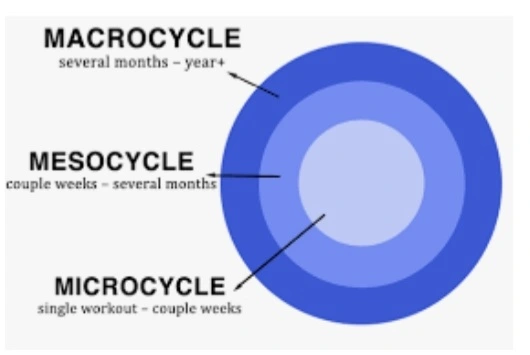
Introduction to Sports Training Cycle – Micro, Meso, Macro Cycle
Training cycles are structured phases used to plan and organize athletic development over time. This system is known as periodization, and it ensures athletes progress systematically while avoiding overtraining and injury.
a. Macrocycle – The Long-Term Plan
Definition: The largest unit in the training cycle, typically spanning 3 months to 1 year.
Purpose: To align training with major competitions and long-term goals.
Structure:
- Preparatory Phase: Builds general fitness, strength, and endurance.
- Competitive Phase: Focuses on peak performance, tactical refinement, and competition readiness.
- Transition Phase: Allows recovery, psychological relaxation, and evaluation before the next cycle.
Scientific Insight:
- Macrocycles ensure progressive overload, adaptation, and peak performance timing.
- They integrate physical, technical, tactical, and psychological components.
Example:
A sprinter’s annual plan leading up to the national championship includes base training (3 months), competition prep (2 months), and recovery (1 month).
b. Mesocycle-The Medium-Term Block
Definition: A sub-unit of the macrocycle lasting 3 to 6 weeks.
Purpose: To target specific training goals such as strength, endurance, or skill refinement.
Structure:
- Typically includes 3-4 microcycles
- May vary in intensity and volume across weeks
- Ends with a testing or recovery week
Scientific Insight:
- Mesocycles allow focused adaptation and load variation.
- They help prevent monotony and overtraining by alternating stress and recovery.
Example:
A footballer’s mesocycle may focus on agility and speed for 4 weeks, with progressive drills and match simulations.
c. Microcycle – The Short-Term Unit
Definition: The smallest unit in the training cycle, lasting 3 to 10 days.
Purpose: To organize daily training sessions with specific objectives.
Structure:
- Includes warm-up, main workout, cool-down, and recovery
- May include rest days, technical drills, and mental training
Scientific Insight:
- Microcycles allow fine-tuning of workload, monitoring fatigue, and adjusting intensity.
- They are essential for daily progression and injury prevention.
Example:
A swimmer’s microcycle might include 3 swim sessions, 2 dryland workouts, 1 recovery day, and 1 technique-focused session.
Benefits of Periodized Training Cycles
- Supports psychological readiness and motivation
- Enhances performance consistency
- Prevents overtraining and burnout
- Allows goal-specific adaptation
- Facilitates injury management and recovery
Types And Methods To Develop Strength, Endurance, And Speed
Training in sports is very important to improve the performance of a player. Training should be specific, systematic, and scientifically based.
Each activity requires specific types of physical fitness components and training methods are required to develop that components.
Strength
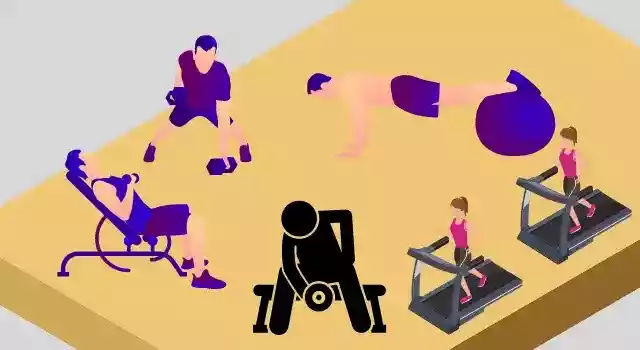
Strength is the ability of a muscle or group of muscles to exert force against resistance.
It is essential for lifting, pushing, pulling, and stabilizing movements in sports.
Click Below To Learn Other Chapter Notes
- Class 12 Physical Education Syllabus
- Chapter 1: Management of Sporting Events
- Chapter 2: Children and women in sports
- Chapter 3: Yoga and lifestyle
- Chapter 4: Physical Education and sports for CWSN
- Chapter 5: Sports & Nutrition
- Chapter 6: Test and measurement in sports
- Chapter 7: Physiology and Injuries in sports
- Chapter 8: Biomechanics and sports
- Chapter 9: Psychology and sports
- Chapter 10: Training in Sports
Types of Strength
Static Strength
It is the ability to act against resistance from one position without any movement, e.g. arm wrestling, powerlifting, or wall pushing. It is also known as isometric Strength.
Dynamic Strength
It is the ability to act against resistance with movement. Movements are visible when someone is doing dynamic strength training. It is divided into three parts.
Methods To Improve Strength
Isotonic Exercises
Involve visible movement against fixed resistance. Muscle contracts and changes length.
Two types of contraction:
Concentric: Muscle shortens
Eccentric: Muscle lengthens
Examples:
- Sit-ups, push-ups, lifting weights
- Hammer throw, triple jump
- Running downhill, landing after a jump
Advantages:
a. Improve muscle strength and endurance through movement with resistance.
b. Boost cardiovascular fitness, joint mobility, and bone density.
c. Support weight management by burning calories and building muscle.
d. Involve natural, functional movements.
Disadvantages:
- Risk of injury if not performed with proper technique.
- May require equipment (weights, machines).
- Plateaus may occur after repeated routines.
- May not be suitable for some joint conditions.
b. Isometric Exercises
- Muscle contracts without visible movement.
- No change in muscle length; work done is zero.
- Builds tension by pushing or pulling immovable objects.
Examples:
- Balancing on one foot
- Pressing against a wall
- Holding a weight at arm’s length
- Sitting posture without a chair
Characteristics:
- Generates more heat and tension than isotonic
- May cause muscle tremors due to high tension
Advantages:
1. Increase muscle strength without movement (joint stability).
2. Require no or minimal equipment.
3. Suitable for rehabilitation and people with joint pain.
4. Quick, easy, and can be done almost anywhere.
Disadvantages:
1. Limited to strength at specific joint angles (not full range).
2. Less effective for improving dynamic movement or endurance.
3. May not be ideal for people with certain heart conditions (can raise blood pressure).
c. Isokinetic Exercises
- Speed remains constant throughout movement.
- Combines features of isotonic and isometric.
- Requires specialized machines like Cybex or Biodex.
Examples:
Ice skating, rope climbing, Chin-ups, rowing, swimming
Characteristics:
- Movement occurs at a fixed, preset speed using specialized equipment.
- Resistance automatically matches force throughout the motion for maximum muscle engagement.
- Provides safe, controlled, and effective strength training for rehabilitation and testing.
Advantages:
1. Allow maximum muscle contraction through full range at controlled speed.
2. Offer precise resistance adjustments for different strength levels.
3. Great for rehabilitation and measuring muscular performance.
4. Reduce injury risk due to controlled movement speed.
Disadvantages:
1. Require expensive, specialized equipment.
2. Not easily accessible outside of clinical or professional settings.
3. Less practical for everyday workouts or home use.
Additional Method:
Resistance Training
- Using weights, machines, or resistance
- bands.
- Example: Bench press, deadlift.
- Benefits: Increases muscle mass, bone density, and neuromuscular coordination.
Plyometric Training
Benefits: Enhances explosive power and reaction time.
Rapid stretching and contracting of muscles.
Example: Box jumps, clap push-ups.
Endurance

Endurance is the ability to sustain physical activity over time without fatigue,
It reflects cardiovascular efficiency and muscular stamina.
Types of Endurance
Basic Endurance
- Involves medium-intensity loads,
- Supports general fitness and aerobic capacity.
- Example: Jogging, swimming, cycling at moderate pace.
Speed Endurance
- Involves sub-maximal intensity.
- Enables athletes to maintain high speed over longer durations.
- Example: 200m or 400m sprint repetitions.
Strength Endurance
- Ability of muscles to overcome resistance repeatedly at medium intensity.
- Combines muscular strength with stamina.
- Example: Rowing, wrestling, circuit training.
Types of Endurance Based on Duration of Activity
Short-Time Endurance
Duration: Up to 2 minutes.
Example: 400m and 800m races.
Energy system: Anaerobic and aerobic mix.
Middle-Time Endurance
Duration: 2 to 8 minutes.
Example: 1500m and 3000m races.
Energy system: Primarily aerobic with anaerobic support.
Long-Time Endurance
Duration: More than 8 minutes,
Example: 5000m and 10000m races, marathon.
Energy system: Dominantly aerobic,
Methods To Improve Endurance
Continuous Training Method
Performed without rest at a steady pace using large muscle groups.
Can be slow, fast, or a varied pace.
Heart rate ranges from 140 to 180 beats per minute depending on intensity,
Duration varies:
Slow continuous: 30 to 120 minutes
Fast continuous: Minimum 20 minutes
Varied pace: 15 minutes fast followed by 45 minutes slow
Physiological Benefits:
1. Improves glycogen storage and capillarisation
2. Increases alkaline reserve and vital capacity
3. Enhances mitochondrial size and enzyme quality
4. Improves aerobic and anaerobic capacity
5. Promotes heart and lung adaptation
Health Benefits:
1. Reduces risk of heart disease
2. Maintains normal blood pressure.
3. Raises HDL (“good”) cholesterol
4. Helps control weight gain
5. Boosts self-esteem
Advantages:
1. Cost-effective and easy to perform
2. Improves health and body tone
3. Reduces body fat
Disadvantages:
1. Can be monotonous and time-consuming
2. One-paced nature may not suit all sports
b. Interval Method
- Activity is performed in repeated doses with rest between them.
- Each dose is resumed when heart rate drops to 120 bpm.
Two types:
- Intensive Interval: 80-90% of max speed
- Extensive Interval: 70-80% of max speed
Duration of Doses:
- Short: 15 seconds to 2 minutes
- Medium: 2 to 8 minutes
- Long: 8 to 15 minutes
Advantages
1. Improves both aerobic and anaerobic fitness
2. Enhances speed, endurance, and recovery
3. Time-efficient and adaptable to various sports health
4. Boosts fat burning and cardiovascular
Disadvantages
1. Risk of injury or overtraining if not property managed
2. Not ideal for beginners or individuals with health issues
3. Requires structured planning and supervision
4. Can cause excessive fatigue without adequate restry
Fartlek Training Method

- Developed by Swedish coach Gosta
- Holmer. “Fart” means speed, “lek” means play.
- Combines aerobic and anaerobic training through varied pace and terrain.
- Intensity ranges from 60% to 80% of
- max speed.
- Session duration: 35 to 60 minutes
Advantages:
1. Inexpensive and easy to perform
2. Improves health and body composition
3. Suitable for sports requiring pace variation (e.g., football, netball)
4. Allows individual control over speed and intensity
5. Engages both aerobic and anaerobic systems
6. Adds variety to training
Disadvantages:
1. May become monotonous
2. Time-consuming
3. Lacks competitive simulation
Speed
Speed is the ability to perform the movement at a faster rate. Speed depends on heredity but can be developed through proper training.
It is the capacity to move a body with the greatest possible velocity.
Types of Speed
Types of Speed
Reaction Time: It is the time taken by the body to respond immediately after the stimulus. It is the first reaction to bring our body into action.
Acceleration Ability: It is the time taken by the body to reach maximum speed. This ability depends upon explosive strength, technique, and flexibility.
Speed of Movement: It is the time taken by the body to perform a complete action.
Locomotor ability: It is the ability to maintain maximum speed for maximum distance.
Speed endurance: It is the ability to perform movements with high speed under conditions of fatigue.
Methods To Improve Speed
Acceleration Run
Designed to reach maximum speed smoothly and quickly.
- Distance: 50 to 75 meters
- Acceleration begins around 30 to 40 meters
- Intensity: Starts at 80% of maximum
- Repetitions: 6 to 12 based on athlete’s capacity
- Rest: Full recovery between repetitions
Precautions
- Evening sessions are ideal
- Proper warm-up is essential
- Avoid fatigue during repetitions
- Strength training should follow acceleration work
Pace Run Training Method
Used to maintain consistent speed over a distance Develops speed endurance.
- Distance: 300 to 800 meter
- Intensity: 70% to 85% of maximum
- Repetitions: 4 to 5
- Rest: Full recovery between repetitions
Precautions:
Same as acceleration method: warm-up, fatigue management, and timing
Additional Method:
Resisted Runs
- Running with added resistance.
- Example: Parachute sprints, sledge pulls.
- Benefits: Builds explosive strength and acceleration.
Agility Ladder and Cone Drills
Benefits: Enhances coordination and movement speed.
Quick footwork patterns.
Example: Zig-zag runs, ladde hops,
Types And Methods To Develop Flexibility And Coordination
Flexibility
Flexibility is the ability of a joint to move freely through its full range of motion.
It is essential for efficient movement, injury prevention, and optimal performance in sports.
Types of Flexibility
a. Static Flexibility
Ability to hold a stretch without movement.
Example: Holding a split position in gymnastics.
b. Dynamic Flexibility
Ability to perform movements through full range while in motion.
Example: High kicks in martial arts or dance.
c. Active Flexibility
Stretching using one’s own muscular effort.
Example: Raising a leg without external support.
d. Passive Flexibility (partner or equipment).
Methods to Develop Flexibility
a. Static Stratching Holding a stretch for 15-99 seconds.
Example: Seated forward bend
Benefits: Improves joint mobility and muscle length
b. Dynamic Stretching
Controlled movements through full range
Example: Arm circles, leg swings
Benefits: Prepares muscles for activity, enhances coordination.
c. PNF Stretching (Proprioceptive
Neuromuscular Facilitation) Contract relax technique with a partner
Example: Hamstring stretch with
Benefits: Deepens stretch and improves neuromuscular control.
d. Ballistic Stretching Bouncing movements to push beyond normal range.
Example: Rapid toe touches.
Benefits: Can improve explosive flexibility but must be used cautiously to avoid injury.
Sport-Specific Applications
- Gymnastics: Requires extreme static and dynamic flexibility.
- Swimming: Shoulder and hip flexibility enhance stroke efficiency.
- Football: Hip and hamstring flexibility reduce injury risk.
- Yoga: Combines static, dynamic, and passive flexibility.
Coordinative Ability
Coordinative ability is the capacity to execute smooth, accurate, and controlled movements. It involves the integration of sensory input, motor output, and cognitive processing.
Types of Coordination
a. Orientation Ability
Understanding body position in space.
Example: A gymnast adjusting mid-air during a flip.
b. Reaction Ability
Responding quickly to stimuli.
Example: A goalkeeper reacting to a penalty kick.
c. Balance Ability
Maintaining equilibrium during movement or stillness.
d. Rhythm Ability
Example: Beam walking in gymnastics.
Timing movements with external cues.
Example: Skipping, dancing, synchronized swimming.
e. Adaptation Ability
Adjusting movements to changing conditions.
Example: Dribbling under pressure in basketball.
f. Coupling Ability
Coordinating different body parts or movements into a unified action.
Example: Dribbling while running in basketball, swimming strokes with breathing, passing while sprinting in football.
g. Differentiation Ability
Adjusting force, speed, and precision of movements based on task demands.
Example: Soft touch in table tennis vs. powerful smash, adjusting grip in archery, controlling pace in long jump approach.
Methods to Develop Coordinative Ability
Balance Drills
BOSU (Both Sides Utilized) ball exercises, beam walking.
Benefits: Improves postural control and stability.
Reaction Games Light board drills, partner tag.
Benefits: Enhances reflexes and decision-making speed.
Rhythm Exercises
Skipping, dance routines, rope jumping.
Benefits: Build timing and movement fluency
Sport-Specific Applications
- Basketball: Requires quick reaction, spatial awareness, and ball coordination.
- Table Tennis: Demands fine motor control and rapid reflexes.
- Martial Arts: Combines rhythm, balance, and adaptation.
- Dance and Gymnastics: High emphasis on rhythm and orientation.
Circuit Training-Introduction and its Importance
Click Below To Learn Other Chapter Notes
- Class 12 Physical Education Syllabus
- Chapter 1: Management of Sporting Events
- Chapter 2: Children and women in sports
- Chapter 3: Yoga and Lifestyle
- Chapter 4: Physical Education and Sports for CWSN
- Chapter 5: Sports & Nutrition
- Chapter 6: Test and measurement in sports
- Chapter 7: Physiology and Injuries in sports
- Chapter 8: Biomechanics and sports
- Chapter 9: Psychology and sports
- Chapter 10: Training in Sports
Circuit training is a structured and dynamic method of physical conditioning. It combines strength, endurance, and mobility exercises performed in sequence with minimal rest. It is widely used to develop overall physical fitness and is suitable for athletes of all levels.
Purpose
- To improve mobility, muscular strength, stamina, and cardiovascular stamina
- To provide a versatile and engaging training format.
Format and Execution
- A circuit consists of 6 to 12 exercises performed one after another.
- Each exercise is completed for a specific number of repetitions or a prescribed duration.
- Short rest periods are allowed between exercises within the circuit.
- Longer rest periods are provided between complete circuits.
Number of Circuits
- The total number of circuits per session may vary from two to six, depending on
- The athlete’s training level (beginner, intermediate, advanced)
- The training phase (preparation or competition)
- The training objective (e.g, endurance, strength, recovery)
Key Guidelines
1. Avoid placing two consecutive exercises that target the same muscle group.
2. Ensure the selected exercises provide balanced training for all major body parts.
3. Maintain proper form and technique throughout the session.
4. Adjust intensity and duration based on age, fitness level, and health status.
Example Circuit:
1. Push-ups (strength)
2. Jump squats (power)
3. Plank (core stability)
4. Shuttle runs (speed)
5. Alternate toe touch (Flexibility)
6. Skipping (coordination)
7. Biceps Curt (Strength)
8. Jumping Jacks (coordination)
Advantages of Circuit Training
1. Develops both strength and endurance simultaneously.
2. Suitable for a wide range of sports disciplines.
3. Easily adaptable to different age groups, fitness levels, and health conditions.
4. Exercises are simple and achievable, boosting confidence and motivation.
5. Offers a variety of exercises, maintaining enthusiasm and engagement.
6. Allows large group participation, making it ideal for schools and teams.
7. Enables a single trainer to manage multiple athletes effectively.
Disadvantages of Circuit Training
1. A trainer may not be able to guide all the trainees at a time.
2. A trainer may not be able to monitor and correct the mistakes in techniques of all the athletes while they performing
3. Some exercises may require specialized equipment, such as gym machines.
4. Requires ample space to set up stations and equipment.
5. Best conducted in facilities with appropriate infrastructure and safety measures.
6. Use of equipment demands health and safety monitoring to prevent injuries.
Training in sports chapter 10 CBSE, class 12 Physical Education notes. This cbse Physical Education class 12 notes has a brief explanation of every topic that NCERT syllabus has.
Frequently Asked Questions
Multiple Choice Questions
1. Tension is created in muscles but there is no movement
a. Isokinetic exercises
b. Isotonic exercises
c. Isometric exercises
d. Isoletic exercises
2. Range of movement of the joint is
a. Strength
b. Flexibility
c. Speed
d. Endurance
3. Which is not a training method of endurance training?
a. Interval training method
b. Continuous training method
c. Acceleration method
d. Fartlek training method
4. Which one is not a type of speed?
a. Balance Ability
b. Reaction ability
c. Locomotor ability
d. Acceleration ability
5. Ability to overcome resistance with speed is
a. Maximum Strength
b. Strength endurance
c. Explosive Strength
Short Answer (SA) Type Questions
1. What is strength? What are the different types of strength?
Ans. Strength is the capacity to withstand force or pressure. It refers to muscular strength. Types of strength are as follows
(i) Maximum Strength. It refers to the greatest force that is possible in a single maximum muscle contraction or one single effort.
(ii) Explosive Strength. It refers to the ability to apply strength along with high speed.
(iii) Strength Endurance. It refers to the ability of the muscles to overcome resistance under fatigue.
2. Differentiate between isometric and isotonic exercises. (CBSE 2020, 2016)
Ans. The difference between Isometric and Isotonic are as follows:
| Isometric Exercises | Isotonic Exercises |
| An isometric exercise occurs when there is tension on a muscle without any movement | Isotonic exercises involve when there is tension in controlled movements of muscle |
| Equipments are not required | Sometimes equipment is required. |
| It needs less time | The time period is more in comparison. |
3. List the advantages and disadvantages of Isometric exercises.
Ans. The advantages of Isometric exercises are as follows:
- In isometric exercises, less or no equipment is required as immovable objects are used.
- Less time is required to perform whereas effects are more.
- Isometric strength training exercises develop a high level of static strength and maximal strength, thus, effective for total muscular strength.
- These exercises can be performed during a warming-up session.
Disadvantages of Isometric exercises are as follows:
- Isometric exercise raises blood pressure.
- It develops static strength whereas in most of the games and sports dynamic strength is required.
- There is less variety of isometric exercises.
4. Isometric exercises are a very important method for developing physical fitness.
Describe what you understand about them.
Ans. Isometric exercises are a type of muscle workout. In this, you perform isometric muscle contraction. It means that muscle contraction occurs when your muscle exerts force without changing its length, i.e. without movement.
In other words, when you do an isometric muscle contraction, your joint doesn’t move. Unlike concentric (when the muscle shortens as it works) and eccentric (when the muscle Lengthens when it works) types of contractions, isometric muscle contraction neither lengthens nor shortens the muscle fibers but strengthens them.
5, What is endurance? Which method will you suggest to develop endurance?
Ans. Endurance is the ability to do sports movements with the desired quality and speed under the conditions of fatigue.
The Fartlek training method is essential to develop endurance. Fartlek is a form of road running in which the runner usually changes the pace significantly dui-ing the run.
The duration of this training lasts for 45 minutes or more. It is followed by walking to sprinting and from rigorous exercises to recovery phases. It is suited to improve cardiovascular endurance.
6. Explain the interval training method. (All India 2017)
Or What is endurance? Explain the various methods of its development.
Ans. Endurance is the ability to do sports movements of the desired quality and speed under conditions of fatigue.
The methods to develop endurance are as follows
(i) Continuous Training Method. This method was developed by Dr Van Aaken. Continuous training involves continuous running or exercise without rest or pause. For example, long-distance running at a stretch.
(ii) Interval Training Method. This method enhances speed and endurance ability. In this method, the exercises are followed by a period of rest in between sets, also known as recovery.
7. What is Fartlek training?
Or What does the term Fartlek mean and who developed this training method? (All India 2017)
Ans. Fartlek is a Swedish term that means ‘speed play’ and has been used by distance runners for years. It improves individual speed and endurance. It is a form of road running or cross-country running in which the runner usually changes the pace significantly during the run.
This method was introduced by O Astrand and Costa Halner. It is a combination of slow and fast running on different terrains, covering hills etc.
8. Explain the advantages of Fartlek training.
Ans. Advantages of Fartlek training are as follows:
- It is good for increasing strength and cardiorespiratory endurance.
- Several athletes can take part in the training program at a time.
- It does not require any equipment and can be organized easily.
- This training method is not rigid; it is flexible in nature. e It improves the efficiency of the heart and lungs.
9. Define speed and explain any one method to develop it. (CBSE 2020)
Or Define speed. Explain the methods of speed development. (Delhi 2016, 15)
Ans. It is the ability to cover the distance in the minimum possible time. It is also the quickness of movement of body parts such as fast skipping, jumping, etc.
Speed Developing Methods
(i) Acceleration Run. It is usually used to develop speed indirectly by improving explosive strength, technique, flexibility and movement frequency.
Before acceleration runs, a proper warm-up must be done. After every acceleration run, there should be a proper interval so that the athlete may start the next run without any fatigue.
(ii) Pace Races. Pace races mean running the whole distance of a race at a constant speed or with uniform speed.
It develops explosive strength and endurance as the athletes run long distances without fatigue. Repetitions can be fixed according to the standards of the athletes.
10. Explain the physiological factors determining speed.
Or Write in brief about any three physiological factors determining speed. (Delhi 2016, 14)
Or Explain the types of speed. (All India 2012)
Ans. The physiological factors determining speed are as follows
(i) Reaction Speed. It is the ability to respond to a given stimulus as quickly as possible, like good speed in sprints, speed in fielding, chasing the ball etc.
(ii) Movement Speed. It is the ability to do a single movement in the minimum time like jumping, throwing, kicking, boxing etc.
(iii) Acceleration Speed. It is the ability to achieve maximum speed in the shortest possible time. This form of speed depends upon explosive strength, frequency of movement and technique. This ability is important in swimming, hockey, football, gymnastics etc.
11. What is flexibility? Explain its types
Ans. Flexibility is the ability of a joint to perform action through a range of movements. It is needed to perform everyday activities with relative ease. Flexibility tends to deteriorate with age.
Flexibility is of two types. These are as follows
(i) Active. It is the ability to perform movement with greater range without using external help i.e. with the help of muscular force e.g. stretching exercises using push-ups etc.
(ii) Passive. It is the ability to perform movement with a greater range using external help i.e. with the help of equipment or a partner.
12. Briefly explain any three coordinative abilities. (All India 2016 )
Ans. The different types of coordinative abilities are as follows
(i) Differentiation Ability. It is the ability to achieve a high level of fine-tuning or harmony of individual movement phases and body part movements.
(ii) Orientation Ability. It is the ability to determine and change the position and movements of the body in different types of situations. For example, in gymnastics, the position and movement of head and eyes is important for orientation.
(iii) Coupling Ability. It is the ability to coordinate body part movements (e.g. movements of hand, feet, trunk etc) with one another.
Coupling ability is especially important in sports in which movements with a high degree of difficulty have to be done e.g. gymnastics, team games etc.
Long Answer (LA) Type Questions
1. Write in detail about strength-improving methods Isometric, Isotonic and Isokinetic. (CBSE 2019)
Ans. There are three different methods of training to develop or improve strength. These are discussed as follows:
(i) Isometric Exercises. These exercises were introduced by Hettinger and Muller in 1953. This happens when there is tension on a muscle but no movement is made, causing the length of the muscle to remain the same.
Therefore, one cannot see any external movement but a muscle is stretched as a lot of pressure is exerted on it.
These exercises are very helpful in sports like archery, yoga, judo, weightlifting etc. Examples of these exercises are pressing or pushing a wall, lifting a very heavy weight, pulling the rope in tug-of-war etc.
(ii) Isotonic Exercises. These exercises were developed by De Loone in 1954. Here, external movement in the muscles can be seen clearly.
When the muscles contract repeatedly, then they develop strength and endurance. The muscles or group of muscles changes in size, i.e. shortens and lengthens during action.
Isotonic exercises are of two types:
Concentric. It means upward movement of the muscles like lifting dumbbells, throwing a wall, etc. It shortens the muscles as you overcome the force of a weight.
Eccentric. It means downward movement of the muscles like lowering the dumbbells down. It lengthens the muscles while being opposed by the force of a weight.
(iii) Isokinetic Exercises. These exercises were developed by Perrine in 1968. Isokinetic exercise refers to exercises that are based on the movement of the muscles throughout the range of the joint with a constant speed.
Examples of isokinetic exercises are pedaling in cycling and arm stroke in swimming.
2. In the strength training exercise group, explain the benefits and drawbacks of Isotonic exercises. Write down the methods to develop endurance
Ans. The advantages of Isotonic exercises are as follows:
- It develops dynamic strength. This is mostly required for games and sports.
- These exercises develop strength and endurance and both can be developed together.
- Isotonic exercises improve flexibility, thus, muscles have more contractility.
- These exercises are used for developing explosive strength along with strength endurance
Disadvantages of Isotonic exercises are as follows:
- Changes of stress and strain injuries.
- Sometimes equipment is required to perform.
The methods to develop endurance are
(i) Continuous Training Method. This method was developed by Dr Van Aaken. Continuous training involves continuous running actively or exercise without rest or pause. For example, long-distance running at a stretch.
(ii) Interval Training Method. This method enhances speed and endurance ability. In this method, the exercises are followed by a period of rest, also known as recovery.
3. Define Speed. What are the methods for improving speed?
Ans. Speed is the rate of motion or the rate of change of position. It is expressed as distance moved per unit of time. Speed is defined as the ability and capacity of an individual to perform similar movements consecutively at the fastest rate. For example, short distance races like 100 meters and 200 meters.
Methods for improving speed are as follows:
(i) Acceleration Runs. It is the ability to increase speed from jogging to running and finally sprinting. It depends on explosive strength, frequency of movement and technique. To utter maximum speed from a stationary position, it should be practiced after learning the proper technique for it
(ii) Pace Run. A competitive pace race is a timed race in which the objective is not to finish in the least time, but to finish within the prescribed time and in the best physical condition.
In some races, the prescribed time is narrowly defined and the winner is the competitor who finishes closest to the prescribed time. Complete recovery; is ensured between two repetitions.
This implies running the whole distance of a race at an almost constant speed.
4. Define flexibility and explain the methods of flexibility development. (Delhi 2015)
Ans. Flexibility is the ability of a joint to perform action through a range of movements. It is needed to perform everyday activities with relative ease. Flexibility tends to deteriorate with age. The methods of flexibility development are as follows
(i) Dynamic Stretching. It refers to stretching that involves putting muscular effort along with movement at the same time. Walking lungs, kicking action, and moving the arm in a circular motion are examples of dynamic stretching.
(ii) Static Active Stretching. Here the muscles are stretched without moving the limbs and the limbs are held to the end position for 30 seconds. Standing on one leg and holding the other leg directly in front for 20-30 seconds is static active stretching.
(iii) Static Passive Stretching. This also refers to stretching of muscles without moving the limbs. However, an external force is applied to hold the stretch in position.
The external force can be some other part of your body like hands to hold the stretch, assistance, or equipment.
(iv) Ballistic Stretching. It uses the momentum of a moving body or a limb in an attempt to force it beyond its normal range of motion.
This is stretching or warming up, by bouncing into a stretched position, using the stretched muscles as a spring which pulls you out of the stretch position. This type of stretching can lead to injury, if the body is not warmed up.
5. Discuss in detail the different types of coordinative ability. (CBSE 2020)
Or What do you understand by coordinative ability? Discuss different types of coordinative abilities. (CBSE 2019)
Ans. The term ‘coordinate ability’ replaced the term ‘agility’ The term ‘agility’ was discarded as it was not clearly defined and there was no unanimity in its meaning. Coordinative ability mainly depends on the central nervous system. It is the ability to perform smooth and accurate movements involving different parts of the body.
The different types of coordinative abilities arc as Follows
(i) Differentiation ability It is the ability to achieve a high level ol’ fine tuning or harmony of individual tnovenu•nt phases and body part Investments.
(ii) Orientation Ability It is the ability to change the position and movements of the body in different types or situations.
(iii) Coupling Ability. It is the ability to coordinate body parts movements (e.g. movements of hands, feet, ‘trunk, etc.) with one another. It is especially important in sports in which fast movements have to be done. For example, gymnastics, team games, etc.
(iv) Reaction Ability. It is the ability to react quickly and effectively to a signal.
(v) Balance Ability. It is the ability of a sportsperson to maintain the equilibrium of the body both in static and dynamic conditions.
(vi) Adaptation Ability. It is the ability to adjust or completely change the movement according to the changing situation. It depends on the speed and accuracy with which a situation is adapted. The perfection of this ability is achieved through the mastery of the skills.
Case-Based Questions
1. Sunita, a student of class VIIl, was identified as a strong girl both physically and mentally. She is being encouraged by her teacher to take up wrestling as a professional sport and start training.
Sunita is also interested in the sport as she has been watching the sport on the TV and she is highly impressed by the Indian women wrestlers.
She expresses her interest to her family that she wants to learn boxing but her brothers made fun of her and ridiculed her. Her father, seeing her interest, sent her to a professional coach to learn that sport properly.
(i) What is maximum strength?
Ans. Maximum strength refers to the greatest force that is possible in one single effort, It is basically the ability of muscles to overcome maximum resistance. It is used in weightlifting, shot put, hammer throw etc.
(ii) Which type of training method should be used by Sunita to develop strength?
Ans. Isometric training methods should be developed as Sunita needs static strength. Her muscles should act against resistance from the opponent player.
2. Ravi has the aim of joining any of the uniform services like police, army, air force etc. For this, he is required to develop endurance. Based on this, answer the following questions
(i) Which factors are essential to note down in an interval training method?
Ans. The factors that are essential to note down are distance of exercise, speed, duration of work and rest, frequency and heart rate.
(ii) What is the difference between continuous and interval training methods?
Ans. Continuous involves continuous running activity or exercise without rest. Interval involves exercises followed by a period of rest.
3. Raghu was a good thrower. When he joined a new training camp, he observed some athletes running on uneven surfaces like bushes, rocks, pits etc. He was in a dilemma. Then the coach explained about that training in detail.
(i) What is the procedure of Fartlek training?
Ans. It begins with a proper warm-up, then aerobic walking to aerobic sprinting, climbing uphill followed by a recovery phase and finally cooling down.
(ii) How Fartlek training can help Raghu become an athlete?
Ans. The fartlek training method provides vigorous activities and tough training which develops the endurance needed by the athletes.
Final Words
From the above article you must have learnt about ncert cbse class 12 Physical Education notes of chapter 10 Training in sports. We hope that this crisp and latest Physical Education class 12 notes will definitely help you in your exam.